
Written by Dr Jessica Mee
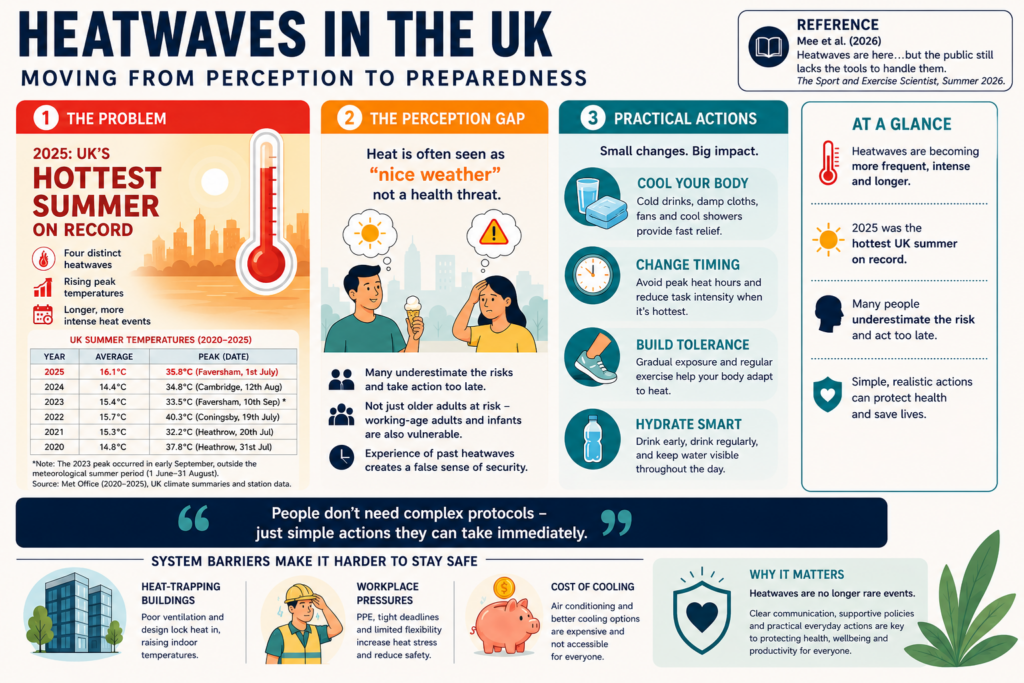
Researchers from the University of Worcester’s Female Health have published new findings in a CASES TSES article exploring how the UK public really experiences, understands, and copes with heatwaves — in what is believed to be one of the largest studies of its kind conducted in the UK to date, in the wake of recent extreme heat events.
“This is a fantastic body of research that really highlights the importance of redefining who we consider ‘vulnerable’ to heat, and designing education that actually meets the needs of the people who’ll use it.” — Dr Jessica Mee
The study, led by Dr Jessica Mee alongside colleagues Gavin Thomas, Dr Ben Duncan, Dr Jennifer Joyce, Dr Oliver Gibson and Dr Neil Maxwell, asked people to reflect on their experiences of recent UK heatwaves, to understand what’s helping people cope, and where the gaps are.
Who gets left out of heat advice
A recurring theme was how unevenly people rate their own risk. Older adults often shrugged off the danger, parents were well-versed in advice for babies and young children — but working-age adults told researchers they felt like an afterthought in public health messaging, despite heat visibly affecting their sleep, focus and productivity.
A knowledge gap in heat adaptation
Most participants knew the basics — water, fans, open windows — but had little awareness that things like saunas, hot baths, or exercising in warm conditions can help the body physically adapt to heat over time. Cost, access and time were cited as the main barriers to trying them.
Workplaces aren’t set up for it either
From healthcare staff struggling to stay hydrated through PPE shifts to teachers in classrooms that “felt like ovens,” the research paints a consistent picture: ageing buildings, unclear policies, and a workplace culture that expects people to just get on with it.
What needs to change
The team’s recommendations focus on practical, low-cost solutions: smarter scheduling of demanding tasks, heat-aware workplace policies, accessible heat acclimation strategies, evidence-based cooling methods, and hydration habits that fit around real working days.
Read the full study
The full article, “Heatwaves are here…but the public still lacks the tools to handle them,” was published in The Sport and Exercise Scientist (Summer 2026), the magazine of the Chartered Association of Sport and Exercise Sciences (CASES), and is available via the University of Worcester Research Repository.