
Written by Dr Jessica Mee
We’re excited to share our latest open-access publication in Experimental Physiology: “Myths and methodologies: Optimising experimental rigour in heat adaptation research: Menstrual status classification and scheduling approaches” by Jessica Mee and Tess Flood. This paper addresses a long-standing challenge in thermal physiology research: how to meaningfully and rigorously include female participants in studies of heat adaptation, while accounting for the complex influence of ovarian hormones.
Why this matters
Historically, female participants have often been underrepresented or inconsistently studied in exercise and environmental physiology. One key reason is the perceived complexity of accounting for menstrual cycle phase and hormonal contraceptive use. Our work aims to move the field forward by replacing uncertainty with practical, scalable solutions.
What the paper offers
The paper is structured into two key parts:
1. A three-tiered framework for menstrual status classification
- A bronze-to-gold approach that allows researchers to match methodological rigour with available resources
- Ranges from low-burden tracking methods to high-precision hormonal verification
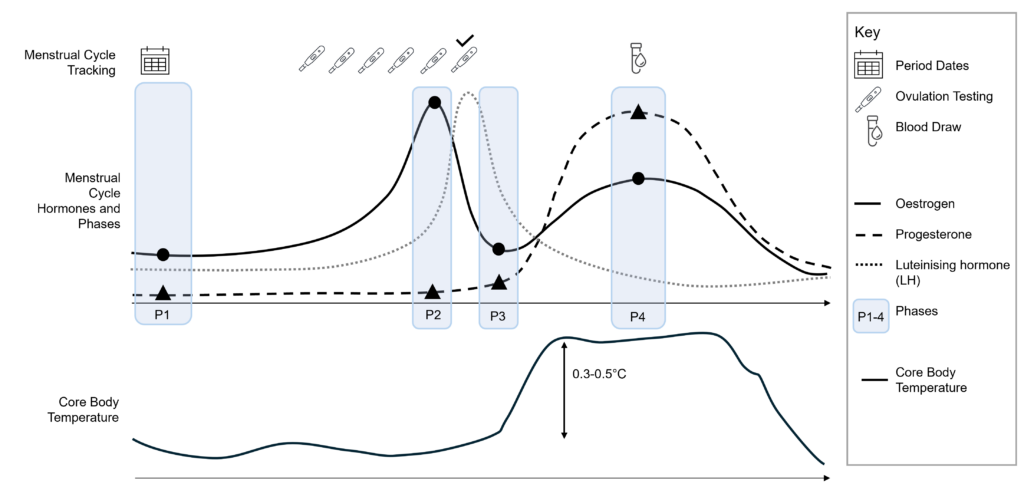
2. Guidance on experimental scheduling
- Recommendations for structuring trials within defined menstrual phases
- Strategies to minimise hormonal “noise” and improve data interpretation
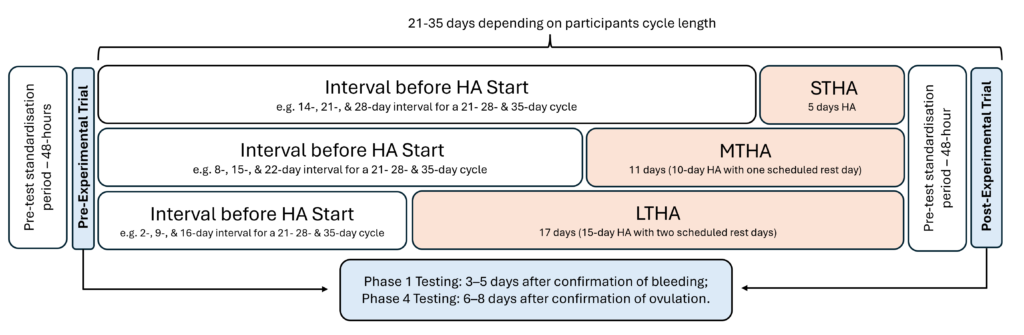
Across both sections, we emphasise one critical principle: transparent, detailed, and consistent reporting of menstrual status and testing timing is essential
Author reflections
“I’m incredibly proud of this work. It provides researchers with clear, practical guidance to improve the rigour of studies involving female participants in heat adaptation research. There is so much potential in this area, and I’m really excited to see how the field develops as more researchers adopt these approaches.” — Dr Jessica Mee
“After meeting Jess ~15 years ago at the University of Brighton, it was brilliant to collaborate on this paper and bring our ideas together. Hopefully it will be food for thought for many thermal researchers!” — Dr Tess Flood
A meaningful collaboration
This project represents a full-circle collaboration between Jessica and Tess, who first connected at the University of Brighton over a decade ago. Jessica particularly valued the opportunity to work together: “Working with Tess on this paper has been a fantastic experience — a truly collaborative process bringing together shared ideas and perspectives. I’m really looking forward to future collaborations in this area.”
Looking ahead
We hope this paper helps:
- Increase confidence in including female participants
- Improve methodological consistency across studies
- Accelerate progress in understanding heat adaptation in women
Ultimately, better research design leads to better science — and more inclusive, impactful outcomes.